We have spent decades fighting to hold manufacturers accountable for injuries and deaths caused by dangerous and defective products. During that time, we’ve helped families rebuild their lives, and forced nationwide recalls that saved others from suffering the same fate.
In the world of complex contingency litigation, having expert legal representation is crucial. It’s about protecting rights, fighting for justice, and navigating intricate legal processes. At our firm, we specialize in handling these complex cases with precision and dedication.
Mass tort lawsuits involve a group of people filing similar claims against a defendant, often for injuries caused by a defective product or harmful drug. It’s a way for individuals to seek justice collectively.
Corporations often get away with fraud and other misconduct because they have expensive lawyers and endless resources. But that doesn’t have to be the case. Our class action team leverages our firm’s talent, knowledge, and resources to fight back on behalf of everyday consumers
Trucking companies put everyone else on the road in danger when they fail to follow the rules. We know the rules and have seen the severe and fatal injuries that follow when they are broken. That’s why we are passionate about fighting for the victims of trucking company negligence.
If you’ve been involved in an auto accident in Orlando, don’t hesitate to reach out to our skilled team of attorneys. Our top priority is to fight for your rights and help you get the compensation you deserve while you focus on healing from your injuries.
A contingency probate lawyer is a legal professional who works on a contingency basis when dealing with probate matters. This means that their payment for services provided hinges on achieving a successful outcome for their client.
An appellate advocacy lawyer, also known as an appellate attorney, specializes in taking cases to appellate courts, challenging the decisions of lower courts. These lawyers possess a deep understanding of appellate law and procedure.
A trial co-counsel is a role taken by an attorney who works in conjunction with another attorney to represent a client in a trial. They share the responsibility of handling the case, including planning the trial strategy, researching legal precedents, preparing and presenting arguments, and handling paperwork.
At the Newsome Melton Law Firm, we don’t just try cases, we get answers. We know: all lawyers do that. But in fact, it’s not that simple. Most law firms are built around volume practices. That means they take many cases, hoping to settle each as quickly as possible. For a lot of clients, especially those with relatively minor injuries, that’s good enough. But for those who have suffered the most severe sort of harm, it’s not.
Their cases are complex, often pitting them against large companies that can hire top-flight legal talent to defend them. The cases are expensive to try, requiring expert testimony, detailed investigations, and enormous amounts of preparation, determination, and commitment. They demand resources most firms just can’t – and won’t – muster. The result: the most crucial issues and questions can go unanswered. Choose our personal injury lawyers today at Newsome Law.
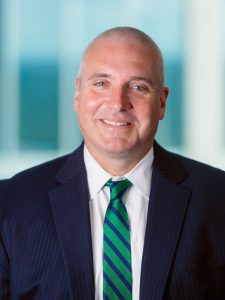
The entire law firm is awesome! My attorney, Frank Melton, truly cares about his clients. He is very knowledgeable and great at what he does. He gives direct access to contact him any time you have a question or concern about your case. They answer every question and explain the process so that you understand what is going on.
Nothing bad to say about this firm. From the very beginning, they were very responsive, completely communicative, and answered all my questions without making me feel overwhelmed with a bunch of legal terms. Majority of the time, I spoke directly with Mr. Frank Melton himself, unless it was something minor. Every email I sent was answered usually within minutes, at most, by the end of the same day.
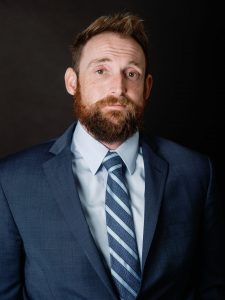
Just an amazing experience with the Newsome Melton firm. Our case was very sensitive and close to our hearts. We were treated with the utmost respect for our situation and everything was handled in a professional and timely manner. We cannot say enough good things about Jesse and the entire team!
The service and professional care I received at Newsome Melton was exceptional. From the beginning, we knew that our case was going to be a challenge because of the very unique details but my attorney Jesse and the Newsome Melton team pulled through. Experiencing something like what we went through was not easy, but the work of the Newsome Melton team has helped to ease that burden. There was no call or email that was left unanswered.
The people at Newsome Melton are fantastic! They have been working on my case for the past 3+ years and I have not once had a bad experience with anyone who works there. Frank and his team have worked tirelessly to help me through my accident and the medical bills that loomed overhead. I am extremely pleased and grateful to have Frank, Laurie, and the rest of the team, fighting on my side during this period in my life.
Newsome Melton Law Group were so helpful, my case has been years in the process, and they kept me in the loop every step of the way. They explained what was happening and the next steps perfectly. Their entire team is professional and friendly. When I was first starting to look for attorneys I was hesitant due to "hear-say" about dealing with attorneys, but this was definitely not the case. I highly recommend their office. Worth every penny!
Previous
Next
OUR AFFILIATIONS
Trust, Leadership, Integrity
Recognized as leaders in product liability law and complex litigation cases, year after year.
Over the past decade, Hyundai has increasingly deployed dual-clutch transmissions (DCTs) throughout its vehicle lineup. DCTs are an intermediary transmission type that sits somewhere between an automatic and a manual; as a result, they are sometimes referred to as semi-automatics. According to Hyundai, the “modern dual-clutch offers the best of both worlds.” But many owners of DCT-equipped Hyundai Santa Fe, Sonata, Veloster N, Elantra N, Kona N, and Santa Cruz vehicles disagree.
Settling vs. Litigating a Motorcycle Accident Claim in Kissimmee, FL
At the crossroads of deciding how to address a motorcycle accident claim, victims often find themselves torn between settling and litigating. While both have their advantages, understanding the difference is crucial. When you settle, you agree to a compensation amount without going to court, often through negotiations between the victim’s motorcycle lawyer Kissimmee, and the at-fault party’s insurance company.
Millions of people are hurt and killed by dangerous and defective products each year. Kitchen appliances explode, tire treads separate, airbags do not deploy—the list goes on and on. The law provides a way for those hurt or killed by defective products to recover the financial compensation they and their families need to rebuild their lives. The remedy comes from a body of law known as “product liability.” Product liability is baked into the heart and soul of our firm—it has been a central focus of our practice since day one.