

Here is what the public is never told.

When you have suffered something catastrophic, a brain injury, paralysis, the death of someone you love, you are forced, at the worst possible moment, to make a decision you have no way to make well. You have to choose a lawyer. And unless you happen to work in the law, you have no real way of knowing who is actually any good.

So most people choose a name they have seen. The billboard. The television ad. The face on the bus bench. But the lawyer with the biggest advertising budget and the best trial lawyer in town are almost never the same person. One is the best at marketing. The other is the best at winning. Telling them apart, from the outside, is nearly impossible.

The people who can tell them apart are other lawyers. They know who actually tries cases instead of settling them on the courthouse steps. They know who wins the verdicts that change the law. They know whose name makes an insurance company nervous. And when it is their own family on the line, they set aside the billboards and call the person they know is the best.


When a lawyer’s own child is hurt, or their wife, or their father, they do not call the number on the billboard. They know better. They call someone like me.

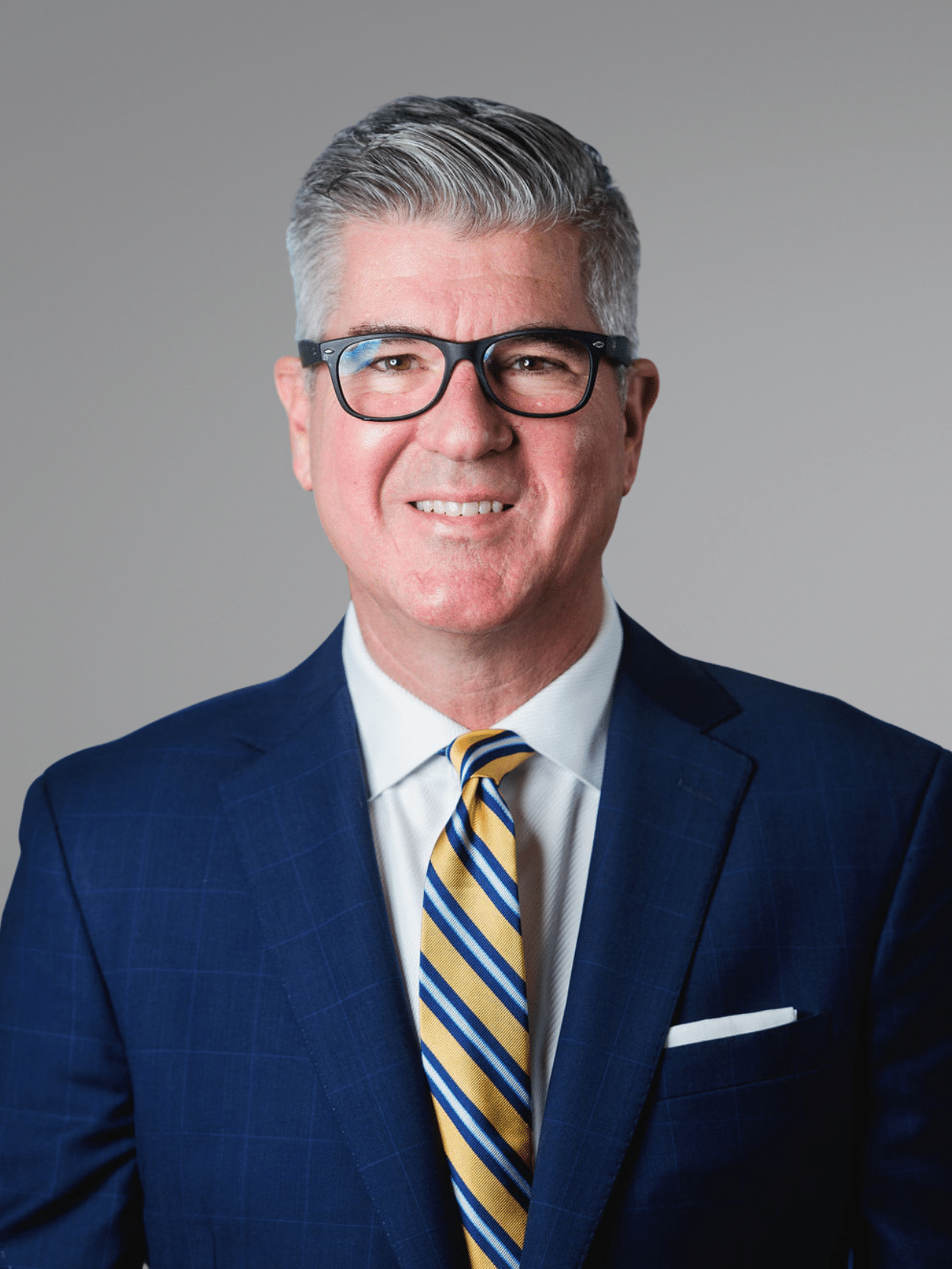
For more than 25 years, I have been one of the lawyers other lawyers turn to when the injury is catastrophic and the case is too important to get wrong.
The recognition you cannot buy.

The profession has its own ways of identifying the lawyers who belong in that group, and none of those can be purchased. It is earned, by results, by reputation, and by the vote of one’s peers.

What are the markers? Consider these; over my career, I have been:

  • Voted by my peers (other lawyers in Florida) and named in U.S. News & World Report’s Best Lawyers as the Best Personal Injury Lawyer in Orlando.
  • Invited into the most exclusive trial lawyer societies in the world, organizations you cannot apply to join, that admit only those regarded as the best in the profession: the International Academy of Trial Lawyers, the American College of Trial Lawyers, the International Society of Barristers, and Summit Counsel.
  • Elected to lead the profession, serving as President of the Florida Justice Association, the Central Florida Trial Lawyers Association, and the Central Florida Federal Bar Association.
  • The founder of Trial School, where I train other lawyers who represent injured people to become better trial lawyers, because the better we all are, the harder it is for negligent corporations to win.

These are not honors a lawyer can buy, or market his way into. These are recognitions the legal profession itself gives to answer the question of “who is the best?” A question you have no way to answer on your own.

Rich

What I have done with that standing.

Recognition is only worth something if you do something with it. I have spent mine going after the most dangerous products in America, and winning. Against some of the largest international corporations in the world.

Twice, the American Association for Justice has given me its Steven J. Sharp Award, presented to the single case each year that did the most to make the public safer. I am one of the rare lawyers to have received it more than once.

The first was for the Ford and Firestone litigation, which led to what was then the largest product recall in history. The second was for representing Corey Burdick, a young man catastrophically injured by a defective Takata airbag, in a case that helped force an even larger recall, one that remains the largest automotive recall in American history.

I am prouder of those cases than of any dollar figure. Because somewhere out there are people who are alive today, or who can still hug their children and lead meaningful lives, because a dangerous product was pulled off the shelf or off the road before it ever reached them. They will never know my name. But this has been my life’s work: handling cases where I can not only help a family who has experienced an unimaginable loss, but also make the world a safer place for everyone.

Why I keep my practice small.

Knowing all of this, you may wonder why I do not simply scale up, take more cases, build the kind of high-volume machine you see advertised everywhere. The answer is that the cases I care about cannot be handled that way.

A catastrophic case is complex, expensive, and slow. It means fighting a corporation that can hire the best defense lawyers money can buy. It takes investigation, expert testimony, years of preparation, and a genuine willingness to walk into a courtroom and try the case. The high-volume firms are built for the opposite: moving as many cases as possible through a settlement pipeline as fast as possible. Such a firm may employ one or two excellent trial lawyers, but it runs on dozens or hundreds of others, and its business model cannot promise that one of its best will ever touch your case.

I made a different choice. I take a small number of catastrophic cases at a time, so that each family gets my full attention and my full resources. When you hire me, there is no pipeline, no handoff, no junior associate you have never met. You get me.

The other half of the work.

In more than two decades of representing families through the worst moments of their lives, I have learned something that surprised me at first. Families want to be made whole, of course. But just as fiercely, they want to know that what happened to them will never happen to anyone else.

I have come to believe that is the highest purpose of this work, and it is why I still do it. A catastrophic injury case, fought all the way, does more than win compensation for one family. It drags what happened into the light. It forces the company to answer for it. It changes policies. And again and again, it changes the thing that caused the harm, so the next family never needs to hire me.

Orlando,Lake,Eola,In,The,Morning,With,Urban,Skyscrapers,And

If you are reading this because something has happened to you.

You will work directly with me. I will listen to your story, fight for the answers you deserve, and pursue everything your family needs for a lifetime of care, while using your case, if you want it used this way, to make sure no one else is hurt the way you were.

And if you are a fellow attorney with a catastrophic injury or product liability case that deserves to be tried rather than dumped, I welcome the conversation. Those are the cases I was built for.

This is my life’s work. It has never been about volume. It is about the people who have lost the most, getting them the justice they are owed, and leaving the world a little safer than I found it.

Practice Focus

Catastrophic and fatal injury, product liability, and complex civil litigation, representing individuals and families against manufacturers and large corporations.

Background

A trial lawyer for more than 25 years. After graduating from the University of Florida College of Law in 1989, Rich served as an Assistant United States Attorney (federal prosecutor) with the U.S. Attorney’s Office for the Northern and Middle Districts of Florida. He left in 1993 to join a large product-liability defense firm in Orlando, representing manufacturers, until a case involving a family who lost a child in a motor vehicle collision led him to leave the defense bar and represent only injured people and families. He has done so ever since.

Signature Results

  • Twice awarded the American Association for Justice’s Steven J. Sharp Public Service Award, given annually to the one case that most advanced public safety: first for the Ford/Firestone tire litigation, then for representing Corey Burdick against Takata, helping drive the largest automotive recall in American history.
  • Recognized by the National Law Journal as having won two of the nation’s 100 largest verdicts in 2018.

Invitation-Only Memberships (the nation’s top trial lawyers)

  • International Academy of Trial Lawyers (Fellow; Board of Directors) — membership limited to 500 lawyers in the United States, less than 1/10 of 1% of practicing American lawyers
  • American College of Trial Lawyers
  • International Society of Barristers
  • The Summit Council
  • American Board of Trial Advocacy (ABOTA)

Honors and Recognition​

  • “Orlando Personal Injury Lawyer of the Year,” Best Lawyers (peer-reviewed)
  • The Best Lawyers in America, 2003–present
  • The National Trial Lawyers, Top 100 Trial Lawyers, 2013–present
  • U.S. News & World Report, “Best Law Firms”
  • Florida’s Legal Elite, Florida Trend Magazine, 2005–present
  • Best Lawyers in Orlando, Orlando Magazine, 2004–present
  • AV-Rated, Martindale-Hubbell, 2004–present
  • Avvo 10.0/10.0
  • Million Dollar Advocates Forum
  • Florida Justice Association Professionalism Award
  • U.S. Department of Justice Special Achievement Award, 1991
EAGLE MEMBER LOGO 2023

Leadership and Public Service

  • President, Florida Justice Association, 2010–2011 (Executive Committee, 2005–2012)
  • Board of Governors, American Association for Justice, 2005–2015
  • Commissioner, Florida Constitution Revision Commission, 2017–2018 (appointed by the Speaker of the Florida House; the Commission’s amendments were approved by Florida voters in November 2018)
  • Member and Chairman, Fifth District Court of Appeal Judicial Nominating Commission, 1999–2002 (appointed by Governor Jeb Bush)
  • President, Central Florida Trial Lawyers Association, 2004
  • President, Orlando Chapter of the Federal Bar Association, 1990–1996
  • Board of Directors, Florida Guardian ad Litem Foundation, 2017
  • Founding Faculty Member, Trial School, Inc.
  • Faculty, Gerry Spence Trial Lawyers College

Florida Justice Association Professionalism Award

Education

  • University of Florida College of Law, Juris Doctor, 1989 (Winner, National Prince Evidence Appellate Moot Court Competition, 1988)
  • Florida State University, B.S., Economics and Political Science, 1986
  • Gerry Spence Trial Lawyers College, Graduate, 2016

Bar and Court Admissions

  • Florida (1989), New Mexico (2009), Texas (2012), Oregon (2015), U.S. Virgin Islands (2022)
  • U.S. Court of Appeals, 11th Circuit (1990); U.S. District Courts for the Middle, Northern, and Southern Districts of Florida (1992); U.S. Court of Federal Claims (1998)